
-
About UsHengshui Yatete Rubber Products Co., Ltd. was founded in 2001, is a professional manufacturer of high-performance rubber hoses. Provide professional technical guidance and selection scheme, remote inspection factory inspection, product and packaging depth customization; Adequate in stock, honest quality assurance, efficient logistics and after-sales, to achieve one-stop purchase of hoses and connectors.

-
-
BlogThe company has established a strict quality management system, and has obtained CCS China Classification Society certification, TS 16949 automotive industry certification, MA (MSHA) mining mark certification, ISO 9001 quality certification, ISO 14001 environmental certification, OSHAS 18001 safety certification.
Hengshui Yatai Especial Rubber Products Co.,Ltd OEM/ODM rubber hoses with barricade—PA-barricade(fuel hose/air-conditioning hose) and UPE-barricade (chemical hose)
2026-04-13


Today, we would like to introduce two kind rubber hoses with barricade structures launched by Hengshui Yatai Especial Rubber Products Co.,Ltd .: rubber hose with PA barricade (for fuel hose and air-conditioning hose) & rubber hose with UPE barricade (for chemical applications).
I. Rubber hoses with PA12 (nylon) barricade include:
1. Low-permeation fuel hose SAE J30 R14
This type of fuel line features a PA shielding layer on its innermost layer, the primary function of which is: Reduce fuel vapor permeation , while also enhancing fuel resistance.
PA (polyamide) is a material with exceptionally strong barrier properties against gases and fuel vapors. Compared with conventional rubbers such as NBR, CSM, and FKM, PA exhibits a remarkably low fuel permeability; therefore, the PA layer serves to prevent fuel vapors from escaping—this is its primary function.
Nylon is further classified into PA6, PA11, and PA12. Our factory uses PA12 because it offers excellent flexibility, low water absorption, and superior resistance to fuels.
In addition to preventing fuel permeation, the PA barrier layer serves three critical functions: 1) enhancing resistance to alcohol-based fuels (a crucial benefit); 2) improving resistance to swelling; and 3) reducing fuel odor emissions.

2. Automotive Air Conditioning Hose SAE J2064 Type E
This type of air-conditioning hose also features a PA shielding layer on its innermost layer, which serves essentially the same purpose as the fuel line; however, The primary objective is not to prevent fuel penetration, but rather to prevent refrigerant permeation (particularly R134a and R1234yf). 。
The refrigerant molecules used in automotive air-conditioning systems are extremely small; for example, R134a and R1234yf. These molecules can penetrate rubber more easily than fuel molecules. If only conventional rubber inner liners (such as NBR or EPDM) are used:
👉 The refrigerant will gradually “leak” out.
👉 Reduced air conditioner efficiency
👉 Insufficient system pressure
The essential function of the PA layer: the PA layer is a refrigerant gas barrier layer.
Function:
Significantly reduce refrigerant permeation
Maintain stable system pressure
Extend the lifespan of the air conditioning system
Comply with environmental regulations
This is the core function.
In addition to preventing permeation, it serves three other critical functions: 1) preventing the carryover of oil by the refrigerant; 2) enhancing system pressure stability; and 3) reducing environmental emissions (which is now of paramount importance).

II. Rubber Hoses with a UPE barricade Structure—Chemical Hoses
UPE stands for UHMWPE, which is known in Chinese as ultra-high-molecular-weight polyethylene, and The operational logic of PA in fuel lines and air-conditioning lines is similar, but the emphasis differs. 。
The core function of the UPE layer is not gas barrier performance, but rather: superior chemical resistance, resistance to swelling, and contamination prevention.
The core function of the UPE lining: resistance to strong chemical media (the most critical).
UPE stands for Ultra High Molecular Weight Polyethylene (UHMWPE), commonly referred to as UPE (Ultra-High-Molecular-Weight Polyethylene).
The molecular weight is typically 3 to 9 million, which is significantly higher than that of conventional PE; consequently, it exhibits exceptionally strong chemical resistance.
The primary issue addressed by the UPE layer is that conventional rubbers (such as NBR and EPDM) are susceptible to degradation when exposed to many chemicals:
Swelling, softening, cracking, and aging—particularly in the presence of strong solvents such as aromatics, ketones, and acids or bases.
And UPE: is virtually unaffected by these chemicals.
In a nutshell, the essential function of the UPE layer is as a chemical-media-resistant corrosion lining—this is its core value.
Second major function: preventing hose swelling (extremely critical).
Third major function: preventing media contamination (particularly critical in the food and pharmaceutical industries).
Fourth function: wear resistance (often overlooked)
What media is the UPE layer primarily resistant to (with the greatest engineering value)?
The greatest advantage of UPE is its exceptional resistance to strong solvents. It is particularly resistant to organic solvents—most critically, benzene, toluene, xylene, acetone, methyl ethyl ketone (MEK), and ethyl acetate—solvents that can severely degrade ordinary rubbers.
However, UPE exhibits excellent chemical resistance under conditions of moderate acidity and alkalinity; for example, it is highly resistant to sulfuric acid (at certain concentrations), hydrochloric acid, and sodium hydroxide. It also demonstrates good stability in alcohols, such as methanol, ethanol, and isopropanol.
Why use UPE instead of PTFE? This is a question many people ask. While polytetrafluoroethylene (PTFE) does offer superior chemical resistance, it has several drawbacks:
Project PTFE UPE
Cost Very high Relatively low
Flexibility Poor Good
Wear resistance Medium Excellent
Processing Difficulty High Low
Therefore: UPE is the preferred material for most chemical hoses.
Unless: extreme corrosive media are encountered.

Previous:
Recommend News

Congratulations on the official launch of the website
Hengshui Yatai Especial rubber Products co., ltd. was founded in 2001 and is a professional manufacturer of high-performance rubber hoses.
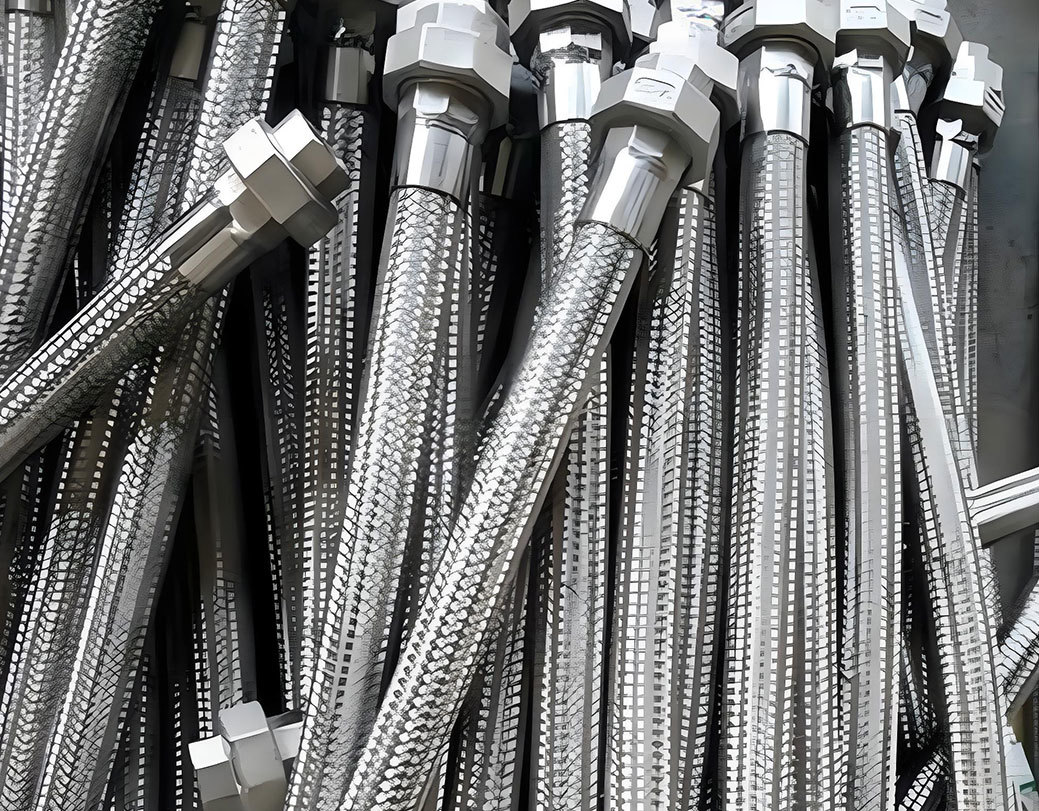
Performance and Application of High Temperature Steam Hose
In modern industrial production, high temperature steam hose is a very important equipment and has a wide range of applications. It can not only transport high-temperature steam, but also withstand high pressure and wear resistance, so it has been widely used in many industrial sites.
Contact: Amanda Wang
E-mail:amanda@yataihose.com
Address: No.1, West of Tengda Street, Hegang Road, Economic Development Zone, Wuyi County, Hengshui City, Hebei Province




Online Message
We will contact you within one working day. Please pay attention to your email.